
Living in Sant Jaume
Sant Jaume is an old town neighbourhood around its Gothic church, between Jaume III, the Born and Plaça del Mercat. Historic townhouses line its narrow streets, with courtyards often hidden behind their doors.
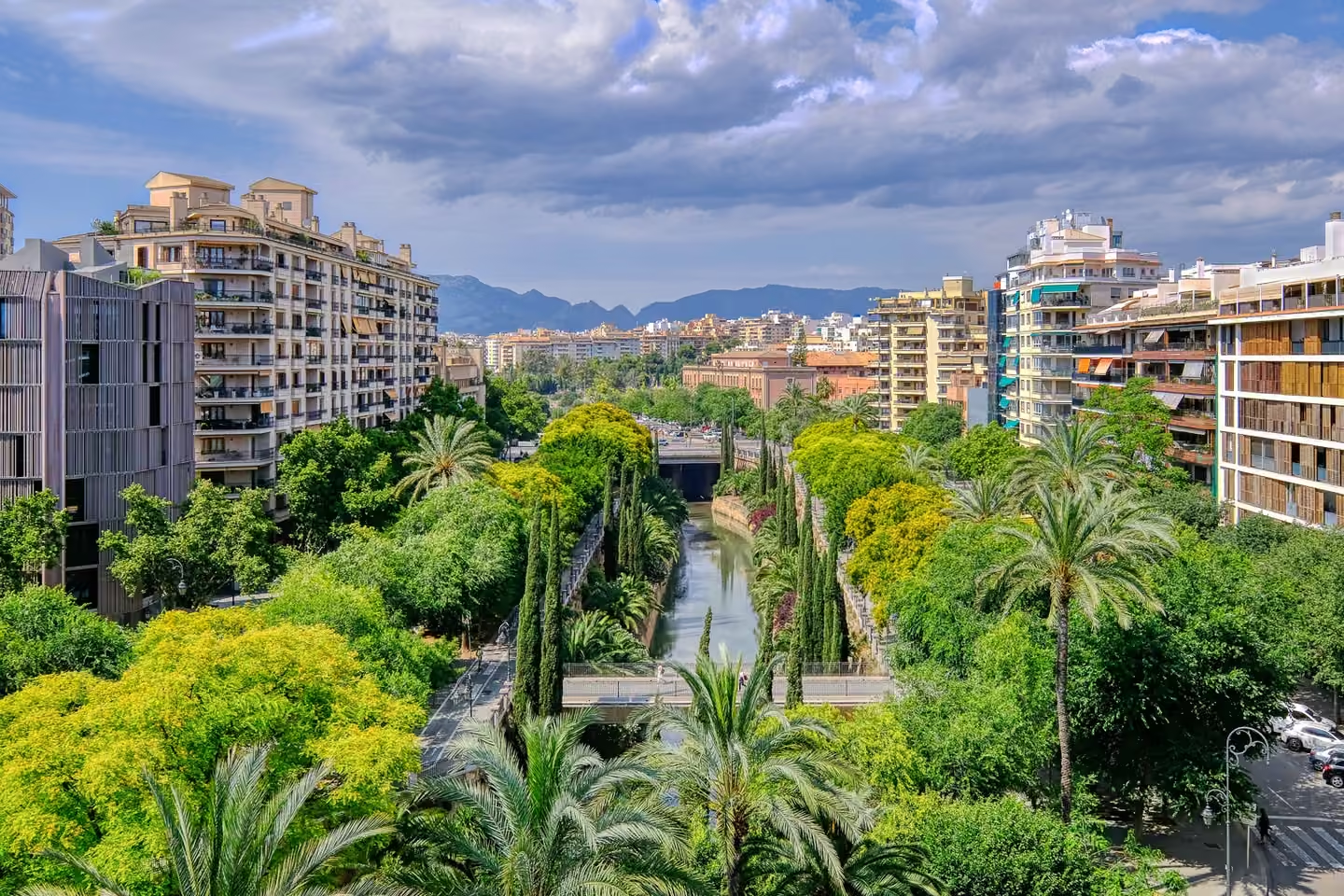
Homes and everyday life
It is an area to explore on foot. The Born, Casal Solleric, independent shops and galleries are nearby, while the Mercat de l’Olivar is an option for everyday shopping.
Homes are mainly flats in historic buildings. Check lift access, parking and planned work on common areas before buying, and visit the street at different times to hear how busy it gets.
Legend has it that Napoleon Bonaparte's ancestors came from the parish of Sant Jaume and left for Corsica in 1406. Without that move, Napoleon might have been born Mallorcan.
Palma’s EMT buses and the waterfront cycle lane connect the western districts and the old town. Use the map to locate the neighbourhood and plan your everyday routes.
Properties for sale in Sant Jaume

Flats & apartments for sale in Sant Jaume, Palma de Mallorca
40120072_DN/11003
5 Bedrooms · 185 m²
€1,100,000
Flats & apartments for sale in Sant Jaume, Palma de Mallorca
40120004_ED/11003
4 Bedrooms · 172 m²
€1,070,000Places to explore
- Església de Sant Jaume
This single-nave Gothic church is one of the four oldest parishes in Palma. The coats of arms of its medieval benefactors are carved on the keystones of the vault, which makes it a small heraldic treasure. A later Baroque portal fronts the street. The church is open to visitors outside mass.
- Passeig del Born
Palma's grand promenade has been the city's social centre for centuries. Under the plane trees you will find the stone sphinxes, the Fountain of the Turtles, flagship boutiques and terrace cafés.
- Casal Solleric
This 18th-century Baroque palace on the Born is one of the finest examples of a Mallorcan noble house. Its arcaded courtyard and grand staircase are a highlight, and it has been a contemporary art centre since 1985. Entrance is free.
- CaixaForum Palma
The former Gran Hotel was designed by Modernista architect Lluís Domènech i Montaner and was Palma's first grand hotel. Today it is a cultural centre with changing exhibitions, talks and a café.
- Museu Fundación Juan March
A 17th-century stately home on Carrer de Sant Miquel houses a fine collection of 20th-century Spanish art and hosts high-quality temporary exhibitions.
- Es Baluard Museu
Palma's museum of modern and contemporary art opened in 2004 on the 16th-century Sant Pere bastion. Its collection includes Tàpies, Picasso and Miquel Barceló, and its rampart terraces have some of the best views over the bay.
- La Seu & Palau de l'Almudaina
Palma's Gothic cathedral is famous for its huge rose window, Gaudí's canopy over the altar and Barceló's ceramic chapel. Next door stands the royal palace of the Almudaina.
- Sa Llotja
The former merchants' exchange is a masterpiece of 15th-century civil Gothic by Guillem Sagrera, and it regularly hosts exhibitions. The surrounding lanes are full of tapas bars.
- Mercat de l'Olivar
Palma's main food market has fish, cured meats, cheeses and fruit. Its oyster and tapas bars make it a popular stop for a late-morning bite.
- Avinguda Jaume III
This arcaded boulevard is lined with fashion stores and cafés and leads from the Born to Plaça Joan Carles I. Bar Bosch, a long-standing local meeting point, stands on that square.
- Parc de Sa Feixina & Parc de la Mar
There are green lungs at both ends of the old town. Sa Feixina lies below the city walls by Es Baluard, and Parc de la Mar has a lake beneath the cathedral.
Schools in and around the area
- Col·legi Sant Francesc
A Franciscan school that has been in Palma's historic centre since 1952. It takes children from nursery all the way to Bachillerato (sixth form).
- IES Ramon Llull
One of the two public secondary schools serving central Palma, for ESO and Bachillerato (ages 12–18).
- IES Joan Alcover
The other public secondary school (ages 12–18) for the central area, near Plaça d'Espanya.
- CEIP Santa Catalina
The nearest public infant and primary school (ages 3–12), just across Avinguda Argentina.
- Lycée Français de Palma
French national curriculum for ages 2–18, part of the French schools network abroad (AEFE / MLF), in Palma's Ponent district.
Queen's College and Bellver International College (both British curriculum) are 10 to 15 minutes away by car, and the Eurocampus Deutsche Schule (German curriculum) at Playa de Palma is about 20 minutes away.
Check current catchments and school admissions criteria. International schools manage their own admissions and fees.
Beaches, golf and the outdoors
- Beaches
Can Pere Antoni, Palma's city beach just past the cathedral, is about 2 km away, a pleasant walk or bike ride along the seafront. Ciutat Jardí and Cala Major are each about 10 minutes away by car or bus.
- Golf
Son Vida, Son Muntaner and Son Quint are about 15 minutes away by car, and Golf de Bendinat is around 20 minutes.
- Outdoors
The seafront cycle lane runs for many kilometres around the bay, from Porto Pi to s'Arenal. In the early morning, the old town's lanes and the Parc de la Mar make a beautiful running loop.
A year in the area
- January · Sant Sebastià: concerts and bonfires fill the old-town squares.
- Easter · The Holy Week processions wind through the old town's streets.
- 25 July · Feast of Sant Jaume (Saint James), the parish's patron saint.
- September · Nit de l'Art: galleries around the Born and Sant Feliu open late in one of Palma's favourite cultural nights.
- December · Christmas illuminations on the Born and Jaume III, and markets in the squares.
Check the dates of each edition before planning a visit.